
Your Gateway to Elite Gaming Markets: Premium Isle of Man Gaming License
Your Gateway to Elite Gaming Markets: Premium Isle of Man Gaming License
The Isle of Man represents the pinnacle of what I call the “premium licensing tier”, a small, exclusive club of gambling jurisdictions that open doors others simply can’t. But the truth is, this isn’t for everyone. If you’re just getting started or you’re running on a tight budget, the investment for an Isle of Man gambling license probably isn’t worth it… at least not yet.
If you’re here because you want to take your gaming company to the next level, then you already know what’s on the line.
The Premium Licensing Ecosystem: Why the Isle of Man Stands Apart as a Gaming License?
But why, really, does the Isle of Man stand apart as a license, you may ask? Say, from Curacao, Anjouan, or Malta? Let’s start with Malta. First off, it’s worth mentioning that Malta is a solid European license, no question, and the tax optimization is real. If you set up your online gambling business there, you can get your corporate tax rate down to around 5%. That’s a game-changer if you’re used to the brutal corporate tax rates in Spain or Italy.
By comparison, Curacao and Anjouan can’t offer that kind of clean European structure. It’s apples to oranges. We’re talking tier 2 licensing versus tier 1 licensing, right? The Isle of Man is a tier 1 and all that, but why does it stand apart? That kind of tier one status, right?
Boring On Purpose: Why Predictability Wins in the Isle of Man
Everybody knows the Isle of Man sets the gold standard when it comes to ownership checks, due diligence, and AML/CFT. In practice? Banking, one of the biggest headaches for any gambling business, suddenly becomes straightforward.
Yeah, zero percent corporate tax, zero capital gains tax, no withholding tax, sure, that’s a win. Gaming duty is low. But honestly, what makes the Isle of Man license so unique is its reputation for stability.
From a planning point of view, boring is underrated. Predictability is everything. And if your end game is an exit, maybe selling the business or going for a public listing, the Isle of Man is simply the place to do it. That stability, the reputation, and the planning certainty… these are the real reasons serious operators choose this type of license.
Market Access: Where Can an Isle of Man Gambling License Take You?
Anjouan, without a doubt, is the go-to for operators eyeing “pre-regulated” markets in Asia, Africa, and parts of Latin America, with just nine main countries on its restricted list.
The Isle of Man takes a different route: you’re not allowed to target any country that already has gambling regulation in place. You won’t find a handy list with the Isle of Man, it’s on you to keep up with which countries are regulated and which aren’t. You’re also expected to steer clear of the obvious: sanctioned countries like North Korea, Iran, the US, and the UK.
So, where does an Isle of Man gambling license actually let you play ball? Most of Asia is open, parts of Africa, some LATAM, Canada (except Ontario), New Zealand, and a couple of European countries like Finland and Norway. Just know that as soon as a market locally regulates, you’re out, but that’s true for any type of gambling license, not just this one.
Here’s a detail a lot of people miss: the Isle of Man GSC isn’t going to give you a yes/no list of markets. They expect company directors to be on top of the legal landscape wherever they operate.
Another thing is, let’s say you happen to pick up a small amount of traffic from a country you’re not actively targeting, just organic spillover. Well, this is usually not a big deal. The GSC isn’t going to force you to block every single jurisdiction unless we’re talking, again, about somewhere like the UK, where it’s completely off-limits without the right license. But if you suddenly switch your target from, say, Southeast Asia to Mexico, and you didn’t include that in your original business plan, that’s a different story. The GSC will expect you to stick to what you filed. If you want to change direction, you need to update them.
How Player Funds Are Actually Protected With a Gaming License in the Isle of Man License
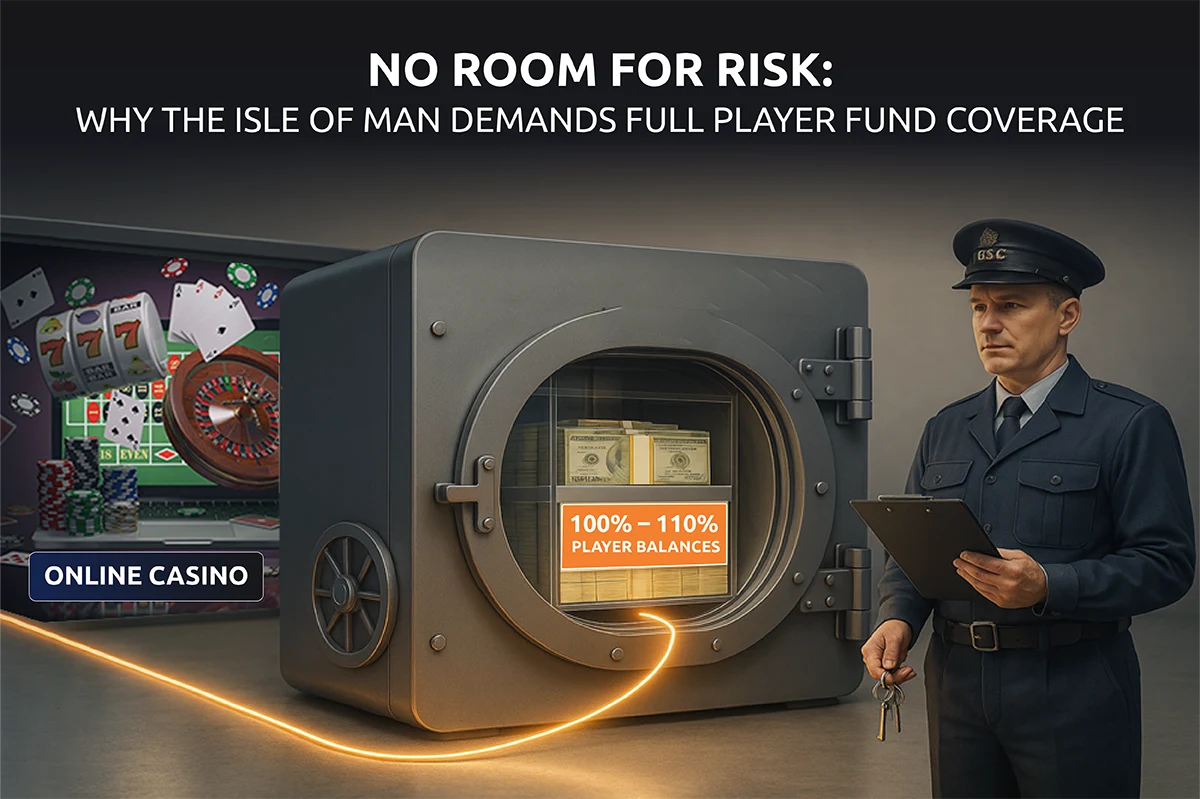
The Gambling Supervision Commission (GSC) needs instant access to all your player data and betting records. If you’re a B2C gambling operator, you must have a bank account in the Isle of Man (or at least with a Basel II-compliant bank). And there’s no getting around the dedicated player protection fund.
That fund needs to hold 100% to 110% of all player balances, every single day. So, if your online casino is holding £1,000,000 in player money, you’d better have at least £1,000,000, sometimes up to £1,100,000 sitting in your bank account, ready to go at a moment’s notice. In practice, this means you have to guarantee every penny that shows up as a player balance on your site, backed by real capital in the bank. If your company ever collapsed, the GSC could step in, recover the funds, and make sure every player gets paid. No waiting, no lawsuits, no drama.
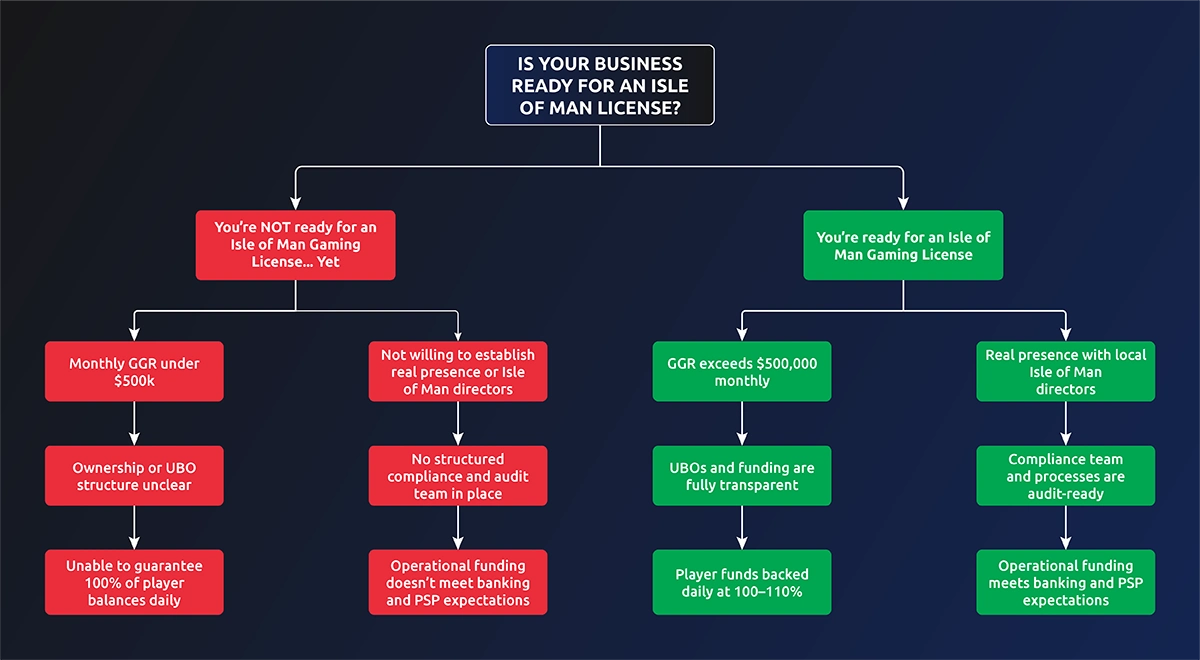
This is exactly why the Isle of Man license is really only suitable for businesses with deep pockets. If you’re just starting out and don’t have serious capital behind you, this isn’t the place to cut corners.
People sometimes ask about insurance. So, is there something like a backup policy for player funds? In some countries, Paraguay comes to mind, you might see insurance used this way, where if the operator can’t pay, the insurance company covers it. But that’s not how it works with the Isle of Man.
That said, every operator we work with on the Isle of Man does carry Directors & Officers (D&O) insurance. That’s not for player balances, it’s to cover the company’s directors and officers in case something goes wrong at a corporate level.
Setting Up and Running a Gambling License on the Isle of Man Gaming Entity: What You Really Need to Know
First off, unlike some other jurisdictions, the Isle of Man doesn’t require a minimum share capital. In plenty of countries, you have to deposit a certain amount of money just to get started, but here, that’s not the case.
What matters much more to the GSC is whether you have enough real substance and actual funding to operate. When you apply for your license, you’ll need to submit detailed financial projections for the next three years. The GSC wants to see that you have enough funds available to keep the business running, especially in the first year or two. So, as part of your application, you’ll break down all the expected costs: licensing, local directors, office space, marketing, equipment, services, basically, everything you’re planning to spend money on.
What “Substance” Really Means for Gambling Companies in the Isle of Man
When people ask about substance requirements for an Isle of Man gaming license, here’s what it really comes down to. You need two local directors, a registered office, and a registered agent located on the Isle. That’s the usual checklist to satisfy the authorities. For most online gaming operators, that’s it.
The Isle of Man Gambling Supervision Commission expects real business activity here. That means board meetings actually held in the Isle of Man, and key contracts are signed by your local directors. This proves you’re running a legitimate Isle of Man business, not just holding a postbox to avoid gaming tax elsewhere.
Sometimes the license requirements go further, but that’s rare for new applicants. You only need extra substance if your business expands significantly, or if you’re a gambling software supplier with global reach. For almost everyone starting out, two local directors meet the gaming license requirements.
Why Most Service Providers Miss the Mark for Gaming Businesses
Most gaming businesses coming to the Isle of Man end up working with a corporate service provider (CSP). These are the folks who’ll help you pull together your business plan, your policies, financial projections, and the whole stack of paperwork you need for your license application. But here’s where a lot of people get surprised: most CSPs on the Isle of Man aren’t focused on gaming. They do a bit of everything: family offices, trusts, private jets, estate planning, aviation, you name it. Gaming is just a side hustle for them.
And… they bill like lawyers. There’s the basic fee, but then there’s this “time spent” model, meaning every little thing, from reading your email to processing a payment or reviewing a contract, gets clocked and charged. You could be paying £150 an hour for a junior staffer, and it only goes up from there, a senior, maybe £175–£200; and for directors, it could be £250 an hour. So it adds up fast, right?
That’s why we do things completely differently. We only focus on gaming. Every person on our team is a senior expert; we don’t have junior admins learning on your project. And honestly, the other big difference? We charge a simple fixed fee. No surprise bills for “time spent.” You know what you’re paying from day one, and that’s it.
Technical and Compliance Requirements: The Real Investment to Obtain a Gaming License
Let’s be transparent, an Isle of Man license requires significant investment, not just in fees but in your operational infrastructure. This is often where operators underestimate the true commitment:
Compliance Infrastructure Requirements
|
Requirement |
Details |
Estimated Investment |
|
Physical Presence |
Local office with designated staff |
$15,000-25,000 monthly |
|
Compliance Team |
Dedicated AML and compliance personnel |
$20,000-35,000 monthly |
|
Technical Requirements |
Server architecture, data protection, testing |
$50,000-150,000 setup |
|
Capitalization |
Segregated player funds and operating capital |
$750,000+ |
|
Audit Requirements |
Regular independent auditing |
$30,000-50,000 annually |
Do these numbers seem high? They represent the reality of premium licensing. But remember, these investments create the very barriers to entry that protect your market position once you’ve achieved it.
Servers and Data for Isle of Man Gambling Licenses
So, another thing people often ask about is servers. The Isle of Man technically wants your main server hosted on the island, but in practice, you can use a cloud solution or host elsewhere, as long as you also keep a full, up-to-date copy of your data on the island. The goal here is so the GSC can access everything quickly if they need to. That’s a requirement for keeping the island’s reputation spotless; they’ve never had a case where a business went under and player funds disappeared.
Of course, there are operational realities. For example, if most of your players are in Asia, running everything directly from the Isle of Man could cause latency issues. So, when you apply for your license, you’ll want to lay out exactly where your main servers will be, maybe in a data center in the Philippines, or using cloud infrastructure, and explain how you’ll replicate all the data back to the Isle of Man in as close to real time as possible. The GSC gets that the industry has changed a ton since the Online Gambling Regulation Act was written back in 2001, and they do allow some flexibility here. The key thing is they need to know, at any moment, they can audit and protect player funds if something goes wrong.
The Most Common Red Flags in the Isle of Man Gambling License Application Process
Red flags in the Isle of Man gaming license process usually come down to two main issues: ownership transparency and reluctance to provide documents.
The biggest delays happen with applicants from Asia and Southeast Asia. The Isle of Man government recently published a national risk appetite statement for iGaming, making it clear. There’s now a limited appetite for businesses with UBOs or shareholders from these regions. It doesn’t mean you can’t get a license in the Isle, but you must prove the source of funds and source of wealth, every step, every document. Regulators want evidence that all money involved in the application is legitimate. That includes UBOs, shareholders, and anyone in a key role or directorship.
Reluctance to provide information is another clear warning sign. Some applicants hesitate to share full details or supporting documents, often due to cultural reasons or a lack of understanding of the Isle of Man’s strict gambling regulations. If a potential licensee resists transparency after the requirements are explained, the application stalls or fails. No shortcuts here.
Board structure is also critical. The tax authorities expect real presence and key decisions to be made on the island. Regular board meetings must be held in the Isle, with decisions recorded and minutes kept. This is how you demonstrate genuine substance.
The Most Overlooked Costs After You Obtain a Gambling License in the Isle
Here’s where many new operators miss the mark: mandatory annual audits. Every full license holder must plan for yearly regulatory and financial audits by the Isle of Man Gambling Commission. These are not optional. If you intend to legally operate in the Isle and stay compliant with the Isle of Man’s gambling regulations, these audits are non-negotiable.
Common Compliance Pitfalls After Your Isle of Man License Is Approved
You get nine months from approval to launch. Before you go live, the gambling commission will want to see your full systems in action, everything from payment flows to responsible gambling safeguards, player onboarding, deposit and withdrawal processes, and even live game testing.
If you wait until the license process ends to build out these systems, you’re burning time and potential revenue. The best operators start setting up compliance, operational teams, and IT infrastructure as soon as they apply for a gambling license on the Isle. Early preparation keeps you ahead.
Another common issue is missing the fine print in the Isle of Man gambling regulations. For instance, customer due diligence rules here differ from those in many markets. There’s a rolling €3,000 limit on deposits or withdrawals within any 30-day period, not just single transactions. In other places, like Anjouan, CDD usually starts at $10,000 or only triggers when someone makes a withdrawal, so copying old thresholds leads to trouble here.
Now the Million Dollar Question: Max, Can We Switch to an Isle of Man License Later?
Many operators wonder, “Can I just get an Isle of Man gaming license when I need it?” The short answer: yes, you can, but preparation and timing are everything.
If you’re organized, the company setup is quick. With documents in hand, an Isle of Man entity forms within days, sometimes by the next week. EMI accounts open fast, too, while a bank in the Isle usually takes three to four weeks post-incorporation.
The real slowdowns happen during the license application. If your ownership structure is complex or key players drag their feet on documents, expect delays. Getting your policies, business plan, and financial projections ready often takes two to three weeks, assuming you’ve got experience in the gambling industry or the right partner.
Once you submit, the standard review for a gaming license in the Isle runs 12 to 16 weeks, depending on hearing schedules. Reviews land on the first Thursday of each month, so timing can vary a bit.
Banking requires its own proof. For B2C operators, you’ll need evidence that the license application is underway before accounts open. You can technically operate without a license in hand, but you must show solid compliance. You’ll need an AML/CFT officer, an AML manual, onboarding procedures, and full KYC processes in place.
Reputational Equity: Building Brand Value with a Full License in the Isle of Man
Reputational equity rarely gets the spotlight, yet it’s one of the most valuable assets in business. A strong license allows you to build trust, win loyalty, and unlock opportunities that weaker jurisdictions simply can’t match. This reputational equity becomes particularly valuable if you’re considering:
- Expanding into newly regulated markets
- Attracting investment or acquisition offers
- Developing partnerships with major game providers
- Building relationships with sports teams or celebrities
Isle of Man Gaming License Costs and Requirements: Real Numbers for Serious Operators
If you want to play in the big leagues, here’s what you’re actually looking at, based on official data and my own experience guiding dozens of operators through this process.
Upfront Costs
- Application fee:£5,250 (about $6,500 USD, one‑time)
- First‑year license fee:£36,750 (around $47,000 USD for a standard OGRA full license; Network license runs £52,500 / roughly $67,000)
- Compliance infrastructure:Realistically, $100,000–$200,000+ (KYC/AML tools, responsible gaming systems, reporting frameworks)
- Legal and consulting:Plan on $50,000–$100,000 (skimping here tends to backfire)
- Annual Running CostsLicense renewal:£36,750–£52,500 ($47,000–$67,000 depending on license type)
- Compliance personnel:$240,000–$420,000 every year if you hire qualified staff rather than just placeholders
- Audits & ongoing regulatory:$30,000–$50,000 per year for independent audits, filings, and reporting
Player Protection Fund: By law, every B2C operator must maintain a dedicated player fund. This fund must always cover 100–110% of all player balances, every day. For active casinos, this often means keeping $750,000 or more in segregated funds at all times, depending on your player base and activity.
Strategic Roadmap: Isle of Man License Timeline (Best Estimate)
Every timeline here reflects recent real cases, using current regulator calendars, live banking feedback, and what’s actually working in the market. If your ownership is clean and your paperwork moves fast, expect this pace. Tangled cap tables or slow UBOs drag out the prep, not the regulator.
1. Feasibility Check & Gap ScanTime: About two weeksCheck your existing controls against the Isle of Man rulebook. Map out shareholder cleanup and a rough ROI. Early warning if something’s off, before bigger spend.
2. Company Incorporation & BankingTime: Three to four days (if all docs are ready)Your Isle of Man company forms fast. EMI accounts often live by week’s end. Brick-and-mortar banks follow in three to four weeks. For B2C, banks accept a stamped license application receipt. Pure B2B? No license required to open.
3. License Application Pack BuildTime: Two to three weeks if KYC is quickBuild out full AML and responsible gaming policies, business plan, financial projections, platform setup, director CVs, and vendor letters. Delays here almost always come from late UBO files or complex corporate charts.
4. Regulator Review & HearingTime: Twelve to sixteen weeksOnce you submit, hearings happen first Thursday monthly. Miss one, you wait another four weeks. The Gambling Commission may ask for extra info, answer fast to stay on track.
5. Go-Live Build-OutInside a nine-month legal windowTechnical testing, UAT, onboarding, vendor integrations, and soft-launch. Start these during months two to five of the regulator review. Early prep here shrinks the post-license sprint.
6. Growth PhaseUpgrade banks, add PSPs, expand to new markets, push marketing. Maturity comes six to twelve months after first real-money bets.
Conclusion
After steering hundreds of operators through the Isle of Man maze, I know exactly who wins big here. If you’re doing $500,000+ GGR a month, have two years of real track record, and your ownership’s squeaky clean, you’re not just ready, you’re built for this.
This isn’t some basic offshore badge. The Isle of Man license covers serious gambling activities and puts you right at the center of what the gaming industry actually chases, real access, real growth, real credibility. If you’re not quite there? No shame. There are other routes with lower license costs and faster launches.
But if you’re ticking the boxes? Don’t overthink it. The Isle of Man offers you the keys to the top floor. The only question left: are you stepping up, or letting someone else take your seat?