
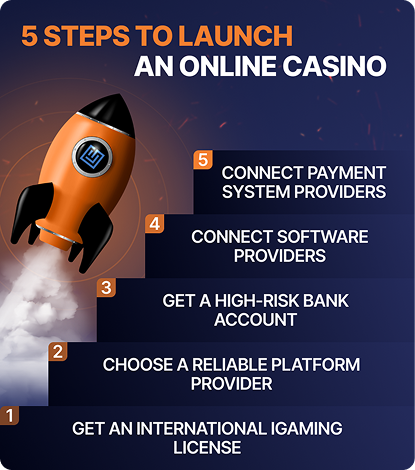

Crypto Gaming Licenses in 2026: Best Jurisdictions, Key Requirements, and Compliance Basics
A crypto gaming license is an official regulation permit that allows an online operator to legally offer games of chance and sports betting using Bitcoin, Ethereum, stablecoins and other digital currencies. In 2026, having a valid license is the only way to secure contracts with tier-one game studios, access corporate banking rails, and deploy trusted on-and-off-ramp payment infrastructure.
The myth of the unregulated anonymous crypto casino is dead. Try to launch without a license in 2026, and you won’t be able to sign contracts with top-tier game aggregators like Evolution, Pragmatic Play, or NetEnt. High-liquidity payment gateways will turn down your applications on day one. Cloud hosting providers and app marketplaces will take your infrastructure offline without warning. Running a successful crypto casino requires treating cryptocurrency as an operational payment rail, not an excuse to skip corporate and regulatory compliance.
Crypto Casinos Still Need a License
Crypto casinos strictly require a gambling license because international financial regulators classify digital assets as real monetary value. Operating without a license exposes founders to severe civil liability, frozen treasury accounts, and immediate operational blacklisting by software aggregators.
- Licensed Operation: Direct access to 5,000+ certified studio titles, full access to multi-currency corporate banking, regulated on-ramps (MoonPay, Banxa), and high player trust with statutory legal protection.
- Unlicensed Operation: Restricted to pirated or low-tier cloned games, blocked from regulated payment gateways, continuous threat of domain seizures, and personal founder liability.
Some founders still believe the blockchain makes licensing optional. They think smart contracts and non-custodial crypto deposits put them outside the scope of international gambling laws. That assumption is completely false. The Financial Action Task Force (FATF), European regulators, and global law enforcement bodies classify cryptocurrency wagers under standard gaming frameworks.
If players deposit value, place a bet on an uncertain outcome, and withdraw winnings, you are running an interactive casino. Without a recognized license, tier-one game studios will not sell you their software. You are left with fake, cloned, or pirated games that players spot immediately, destroying your brand equity before you take your first deposit.
What Founders Are Really Choosing
Choosing a crypto gaming license is not a contest to find the cheapest piece of paper; it is a strategic business decision that dictates your market access, banking infrastructure, and ongoing compliance overhead. Founders are balancing four foundational trade-offs. This includes total cost of ownership, speed to market, payment provider acceptance, and player conversion friction.
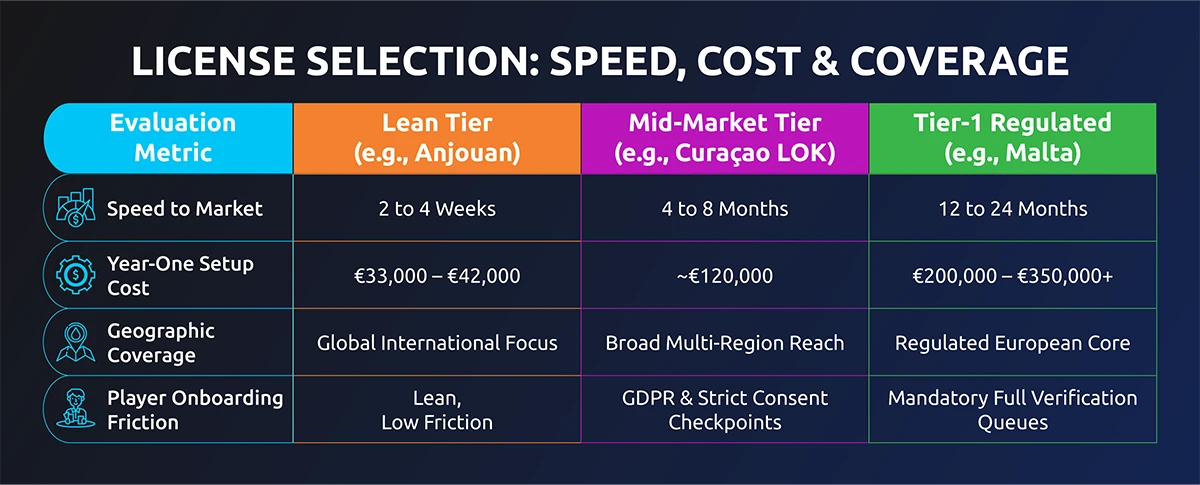
When evaluating jurisdictions, analyze how the license impacts daily operations. A cheap license that tier-two payment service providers (PSPs) and game aggregators reject will stall your project.
Conversely, an expensive Tier-1 European license with lengthy approval queues and heavy local substance requirements will drain your startup capital before you acquire your first thousand active players.
Quick View of the Main Jurisdictions
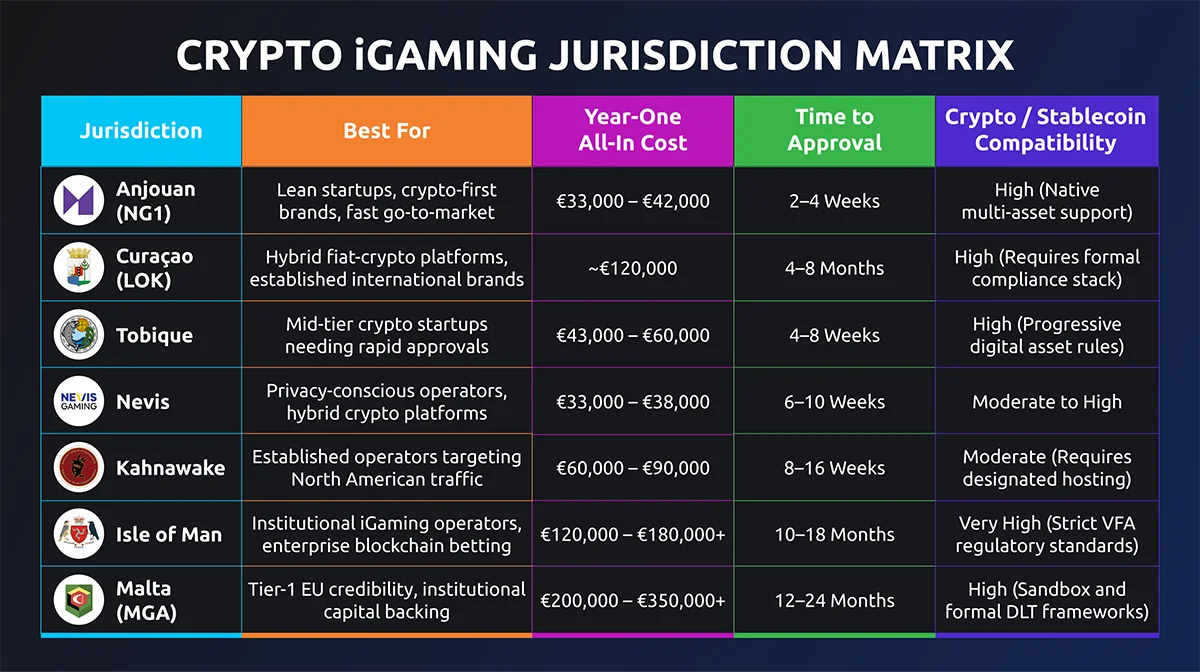
The top crypto gaming jurisdictions in 2026 are Anjouan, Curaçao, Tobique, Nevis, Kahnawake, Isle of Man, and Malta. Each framework caters to specific operational sizes, target geographies, and capital allocations. Here is exactly how they stack up by cost, speed, and crypto compatibility.
Anjouan
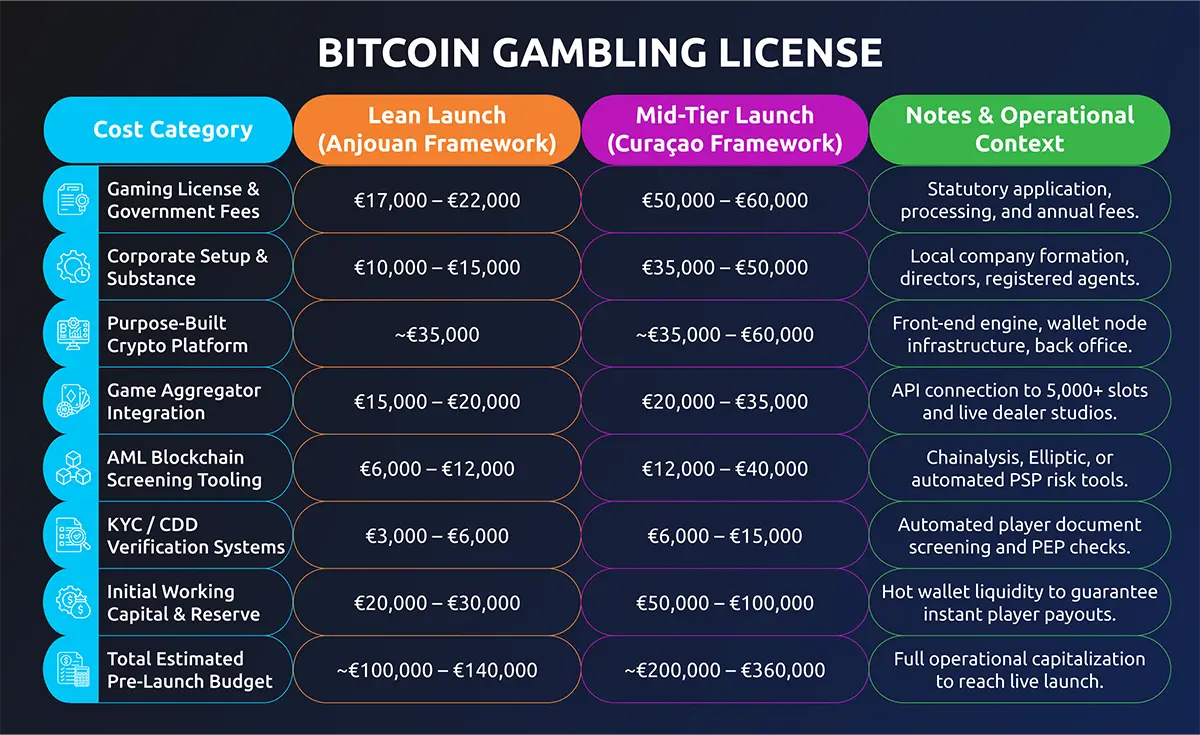
Anjouan (Union of Comoros) has emerged as the premier offshore licensing hub for crypto-first online casinos due to its low setup costs, rapid processing times, and pragmatic digital asset regulations. Under the modern NG1 regulatory structure, an all-in Anjouan gaming setup costs between €33,000 and €42,000 for year one, covering corporate formation, annual government fees, local compliance monitoring, and corporate banking setup.
Applications process in two to four weeks with clean documentation. Crucially, Anjouan operates without European GDPR constraints, eliminating excessive registration friction for international players while remaining fully compliant with global Anti Money Laundering (AML) standards.
Curaçao
Curaçao has moved away from its traditional master licensing system to direct licensing under the National Ordinance on Games of Chance (LOK) and the Curaçao Gaming Authority (CGA). A Curaçao license has a high level of global recognition and acceptance with all major game aggregators, but it is about 3 times more expensive than Anjouan, costing around €120,000 all-in for your first year. Curaçao also has strict data protection frameworks that are aligned with GDPR and has local substance requirements that require explicit consent checkpoints that can increase registration friction and lower initial conversion rates.
Tobique
Tobique (Canada) provides a good middle ground for startups looking for a modern alternative to Caribbean jurisdictions. First year setup costs are between €43,000 and €60,000 and renewals are between €20,000 and €25,000. Tobique offers fast four to eight week approvals. Its framework includes clear guidelines for online assets and increasing credibility with global payment processors and game aggregators.
Nevis
Nevis provides an under-utilized, privacy-centric corporate framework that is well-suited for hybrid fiat-crypto operators. With first-year corporate and licensing fees averaging €33,000 to €38,000, Nevis pairs a stable common-law legal system with robust asset protection laws. It is particularly effective for operators who prioritize corporate structural privacy alongside basic iGaming compliance.
Kahnawake
The Kahnawake Gaming Commission (Canada) is an established North American regulatory body that has been operating since 1999. It does require certain data routing and upfront costs of between €60,000 and €90,000, but Kahnawake offers great regulatory stability, sound dispute resolution systems and good standing for operators targeting international players.
Isle of Man
The Isle of Man is a Tier-1 British Crown dependency that provides an advanced regulatory framework for Virtual Financial Assets (VFAs) and blockchain-native gambling platforms. Securing this license requires deep compliance staffing, physical on-island substance, and six-figure financial reserves. It is designed specifically for enterprise-level operators and publicly traded gaming corporations seeking optimal tax positions and prestige.
Malta
The Malta Gaming Authority (MGA) represents the gold standard of European iGaming licensing. Through its Innovative Technology Arrangements and Virtual Financial Assets frameworks, Malta allows licensed operators to accept digital assets within an audited sandbox environment. However, with approval timelines stretching from 12 to 24 months, rejection rates exceeding 95%, and setup capital requirements easily crossing €200,000, Malta is generally impractical for early-stage startups.
Core Licensing Requirements Operators Should Expect
To secure a crypto gaming license in 2026, operators must provide comprehensive corporate documentation, verify the Ultimate Beneficial Owner (UBO) source of funds, and submit audited internal compliance manuals. Here are the essential documentation pillars you need to pass regulatory scrutiny.
- UBO Due Diligence: ID copies of all shareholders who own 10% or more, unblemished criminal records and a current utility bill to validate identity and background.
- Source of Wealth: Bank statements, exchange trade history, or signed crypto-wallet audit reports showing that funds are from a legitimate source.
- Corporate Governance: Memorandum & Articles of Association, director appointments and extracts from the company registers showing the structure of the company.
- Compliance Policy Documents: AML, KYC, CTF and Responsible Gaming policy documents with active monitoring.
- Technical Certification: Independent RNG audit certificates from GLI, iTech Labs and BMM that certify game fairness, software integrity and cold-storage custody.
Regulators conduct rigorous background checks on every individual holding 10% or more of corporate equity. If your startup capital originated from early cryptocurrency holdings or decentralized finance (DeFi) investments, you must provide an on-chain cryptographic audit trail (wallet addresses, signed messages, and exchange records) verifying the legal origin of those assets. Gaps in UBO source-of-wealth documentation represent the primary reason gaming license applications stall or face rejection.
Platform and B2B Provider Readiness
A crypto casino requires a purpose-built software platform with native multi-currency wallet architecture, certified Random Number Generator (RNG) math, and real-time blockchain node connectivity. Attempting to modify a legacy fiat casino platform with a cosmetic crypto plugin leads to cashier failures and security vulnerabilities.
- Wallet Architecture: Multi-wallet engine with instant dynamic address generation, avoiding forced internal fiat conversions.
- Network Integration: Direct support for Layer-1 and Layer-2 blockchains with automated transaction confirmation listeners.
- Analytics Connectivity: Native API links to ChainalysisElliptic, and TRM Labs for real-time wallet risk scoring.
- Cashier Speed: Automated settlement for zero-wait player withdrawals.
- Content Readiness: Native Web3 crash games and provably fair mechanics that load instantly alongside aggregator titles.
A robust crypto casino software platform costs approximately €35,000 upfront. The platform must support native Web3 wallets (such as MetaMask and WalletConnect), dynamic QR code address generation and sub second transaction parsing across multiple blockchains.
Your software must also hold independent RNG certifications from accredited testing laboratories such as Gaming Laboratories International (GLI) or iTech Labs to ensure that game logic and provably fair algorithms meet statutory mathematical standards.
Compliance as an Operating Model, Not a Formality
Compliance in crypto iGaming is an active, daily operating system designed to protect player funds, eliminate fraud, and maintain operational stability. Modern regulators demand automated identity verification tools and integrated responsible gambling controls. Here is how your tech stack breaks down.
- Identity Verification: Automated ID verification, liveness check, and PEP screening in real-time using Sumsub, Complianza, or AU10TIX in under 2 minutes.
- Deposit & Loss Limits: Native back-office player controls enable users to set daily, weekly, and monthly spending limits.
- Cooling-Off Periods: Automated player session modules that impose mandatory 24-hour to 7-day voluntary account pauses.
- Self-Exclusion: Direct links to centralized registries for permanent or 6 month account deactivations.
- Age Prevention: Automated age verification tools that limit access and prevent transactions by minors.
To maintain regulatory standing, your platform must integrate automated KYC and identity management solutions like Sumsub, Complianza, or AU10TIX. These systems automate document authentication, liveness detection, and global sanctions screening in under two minutes.
Additionally, responsible gambling modules are non negotiable across all jurisdictions. Operators must give players direct back-office controls to set self-exclusion periods, loss limits, and maximum daily deposit caps.
AML, Screening, Monitoring, and Reporting Stack
Crypto casinos must deploy automated on-chain screening tools to prevent illicit funds from entering their operational hot wallets. Tools such as Chainalysis, Elliptic, and TRM Labs screen wallet addresses in real time to intercept stolen funds, darknet market proceeds, and sanctioned capital. Integrate the right screening tier below to block high-risk deposits before they contaminate your wallets.
- Direct API Nodes (€6,000–€40,000/year): Integrations with Chainalysis, Elliptic, or TRM Labs that score inbound wallet risk before crediting a player’s balance.
- Managed Processor Stack (Built into 0.5%–1.0% fee): Third-party crypto gateways executing automated screening upstream before funds reach the cashier.
- Transaction Monitoring (Internal Stack): Custom rule engines or Complianza integration flagging abnormal betting velocity, structured micro-deposits, and chip-dumping patterns.
When structuring your operational stack, you must verify whether your third-party crypto payment processor handles blockchain analytics automatically or whether you must license these tools directly. If you operate your own proprietary processing nodes, implementing transaction monitoring software from Chainalysis, Elliptic, or CipherTrace is mandatory, costing between €6,000 and €40,000 per year depending on transaction volume.
Screening incoming crypto is a direct financial risk mitigation measure. It includes accepting deposits from a red-flagged or sanctioned wallet can permanently contaminate your casino treasury, leading downstream liquidity providers and exchanges to freeze your corporate accounts.
KYC Thresholds and Player Verification Tiers
KYC is mandatory under international anti money laundering regulations, but operators have the structural flexibility to establish tiered verification workflows that balance fraud prevention against player conversion rates. Implement the tiered verification framework below to keep player onboarding friction low without compromising compliance.
- Tier 0 (Micro-Play): Registration and micro-deposits via email or Web3 wallet connection plus automated IP checks for frictionless onboarding and maximum conversion.
- Tier 1 (Intermediate): Triggered at $500 – $2,000 in cumulative transactions; requires government ID and an automated 2-minute liveness check.
- Tier 2 (Full Due Diligence): Triggered upon exceeding $10,000 (Anjouan) or €2,000 (Tobique/Europe) wagered; requires a passport, utility proof of address and source-of-wealth audit by the MLRO.
Regulatory frameworks establish statutory verification limits:
- Anjouan (NG1): Full KYC (passport verification and proof of residential address) is statutorily triggered when cumulative deposits or withdrawals cross the $10,000 threshold.
- Tobique and European Models: KYC verification is mandatory within 30 days of registration or once a player reaches €2,000 in cumulative wagers (where cumulative betting volume counts, not just net deposits).
Within these statutory parameters, operators establish their own internal risk thresholds (typically requiring basic verification on withdrawals between $500 and $5,000). Setting your internal KYC threshold too high invites money laundering and bonus abuse; setting it too low creates unnecessary onboarding friction that drives players to competing brands.
Best practice involves utilizing behavioral analytics, device fingerprinting, and risk-based scoring to identify bad actors silently before imposing manual document friction.
Stablecoin Dominance and Network Selection in 2026
Stablecoins represent over 85% of all crypto gaming deposit volume in 2026, with Tether (USDT) and USD Coin (USDC) dominating the global cashier landscape. Network selection directly influences player satisfaction through layers demanding fast confirmations and minimal gas fees.Here’s how the leading networks compare.
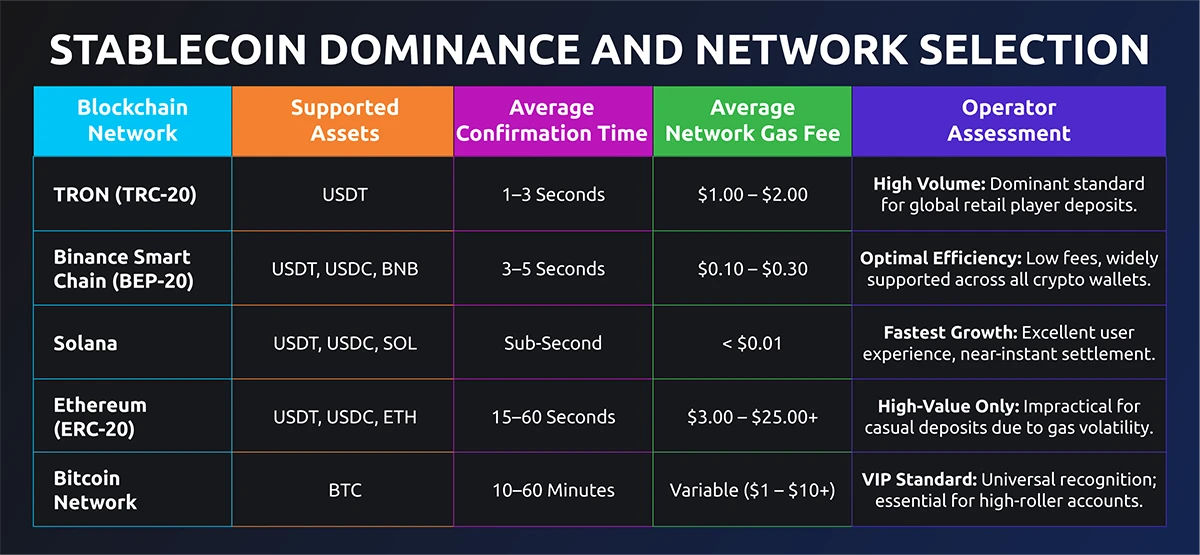
Deploying the right network mix ensures low transaction failure rates. Supporting TRC-20, BEP-20, and Solana ensures that casual players depositing €20 to €100 do not lose a massive percentage of their bankroll to network gas fees.
Same Coin In, Same Coin Out: The Payout Discipline
The “Same Coin In, Same Coin Out” rule is an essential AML operating principle requiring players to withdraw their winnings using the exact same cryptocurrency and blockchain network they used to deposit. Allowing cross asset withdrawals turns your casino into an unlicensed money transmitter and exposes your brand to severe regulatory penalties.
- Compliant Payout: A Player deposits 500 USDT via TRC-20 and receives winnings of 500+ USDT via TRC-20 to the same address (fully compliant, zero cross-currency money transmission).
- Illegal Cross-Swap: A Player deposits 1,000 USDT via TRC-20 and requests payout in untraceable Bitcoin or Monero (non-compliant illegal coin mixing that triggers license revocation).
- Arbitrage / Laundering Vector: A Player deposits an illiquid token, places minimal turnover (0.01%), and attempts withdrawal in stablecoins (flagged immediately for a suspicious activity report by the MLRO).
An online casino holds a license to offer gaming; it does not hold a financial services license to operate a cryptocurrency exchange or money transmitter. Bad actors frequently target crypto platforms to perform coin mixing.
This includes depositing blacklisted stablecoins, playing low-volatility games with a 99% Return to Player (RTP), and requesting withdrawals in untraceable Bitcoin to clean the funds. Enforcing strict “Same Coin In, Same Coin Out” controls eliminates this fraud vector, protects your treasury reserves, and maintains an unblemished compliance audit trail.
Payments, Banking, and PSP Considerations
Operating a modern crypto casino requires access to corporate bank accounts, high-liquidity cryptocurrency settlement desks, and integrated fiat-to-crypto on-ramps. An effective payment setup bridges the gap between traditional banking rails and decentralized digital currencies:
- Direct Crypto Settlement Rails: Dedicated nodes or enterprise gateways (BitPay and CoinsPaid) to process native on-chain crypto deposits and instant withdrawals.
- Fiat-to-Crypto On-Ramps: Embedded checkout widgets (MoonPay, Banxa and Transak) enabling casual players to purchase digital assets instantly using cards or Apple Pay.
- Automated AML Screening: Dedicated tools (Chainalysis, Elliptic and TRM Labs) screen wallet addresses in real time prior to crediting balances.
- Corporate Treasury & EMIs: Accounts with crypto-friendly European Electronic Money Institutions and multi-sig vaults to handle payroll, B2B supplier invoices, and profit distributions.
To maximize player acquisition, integrate third-party fiat-to-crypto on-ramps such as MoonPay, Banxa, or Transak directly into your cashier interface. This allows casual users who do not own crypto to purchase digital assets instantly using their credit cards or Apple Pay, with the resulting tokens routed directly to their player balance.
For corporate operations, you must secure dedicated corporate bank accounts with crypto-friendly European Electronic Money Institutions (EMIs) to manage payroll, pay B2B software supplier invoices, and clear corporate taxes. At LicenseGentlemen, our advisory specialists work directly with founders to structure bankable corporate entities and integrate licensed payment processors from day one, ensuring your operational cash flow remains stable and fully compliant.
Bitcoin Gambling License Cost: The Real Numbers Behind Fees
The total cost of launching a licensed crypto casino in 2026 averages €100,000 for pre-launch operational expenses, with ongoing costs determined by your chosen licensing jurisdiction and tech stack. Structuring a launch budget requires separating upfront licensing fees from ongoing software, liquidity, and compliance capital.
How to Choose the Right License: 5-Point Framework
Selecting the right gaming jurisdiction requires testing your business model against five operational benchmarks. Applying this framework prevents founders from committing capital to a framework that restricts their target markets or payment setup.
- Total Capital Allocation: Determine whether your available runway favors a lean €33,000 offshore setup (Anjouan) or a comprehensive €120,000 framework (Curaçao). Never spend more than 30% of your total starting capital on licensing alone.
- Target Geographic Profile: Align your regulatory authorization with player locations across Latin America, Asia, Africa, or Europe.
- Payment Stack Compatibility: Ensure that your targeted crypto gateways, fiat on-ramps, and European banking partners underwrite the chosen jurisdiction.
- B2B Software Approval: Verify that your preferred game aggregators (such as Pragmatic Play, Evolution, and Hacksaw) will readily execute commercial content agreements under your license.
- Operational Compliance Capacity: Assess whether your team has the internal compliance resources to maintain the reporting, audit, and local director mandates of the regulator.
Common Founder Mistakes in Crypto Gaming Licensing
The most costly mistakes in crypto gaming occur when founders treat compliance as an afterthought or choose a jurisdiction based purely on low initial price tags. Avoiding these pitfalls will protect your capital, operational timeline, and market reputation.
- Focusing Exclusively on Price: Selecting an obscure, unverified license to save €5,000 often leads to immediate rejection by tier-one game providers and payment processors, turning your initial savings into dead capital.
- Postponing Payment Integrations: Waiting until your license is granted before contacting crypto PSPs and corporate banking partners creates months of unnecessary delay. Underwrite your payment rails while your license application is in review.
- Underestimating Ongoing Compliance: Assuming crypto platforms do not require structured AML monitoring or Money Laundering Reporting Officers (MLROs) leads to swift regulatory sanctions and revoked licenses.
- Deploying Cosmetic Crypto Plugins: Attempting to modify a legacy fiat casino platform with a crypto plugin creates cashier crashes, high latency, and manual payout bottlenecks.
- Failing to Screen Inbound Wallets: Accepting unregulated crypto deposits without automated on-chain risk screening risks freezing your casino’s primary operational treasury.
Conclusion
The crypto gaming market in 2026 offers immense commercial opportunity, but only for operators who build on a foundation of legal clarity and operational compliance. The era of flying under the radar with an unlicensed, anonymous platform is over.
Success requires balancing velocity with compliance. This means launching with a cost-efficient license like Anjouan or Tobique, deploying a purpose-built multi-currency platform, and automating your on-chain AML and KYC monitoring from day one.
LicenseGentlemen has structured over 500 successful gaming licenses and corporate frameworks worldwide. Whether you are launching a lean crypto native brand or structuring a hybrid fiat crypto casino for international scale, our advisory team will architect your licensing, corporate structure, and banking relationships with precision.
Ready to build your crypto casino on verified numbers? Submit your project details through our website application form today, and the LicenseGentlemen corporate advisory team will engineer a tailored licensing and compliance roadmap for your brand.
FAQ
Most jurisdictions do not issue a separate license specifically for crypto casinos. Instead, established regulators in Anjouan, Curaçao, Tobique, and Malta treat cryptocurrency as an authorized payment method under their standard interactive gaming frameworks. Operators obtain a standard B2C gaming license while integrating certified blockchain custody, AML transaction screening, and KYC workflows to process digital assets compliantly.